
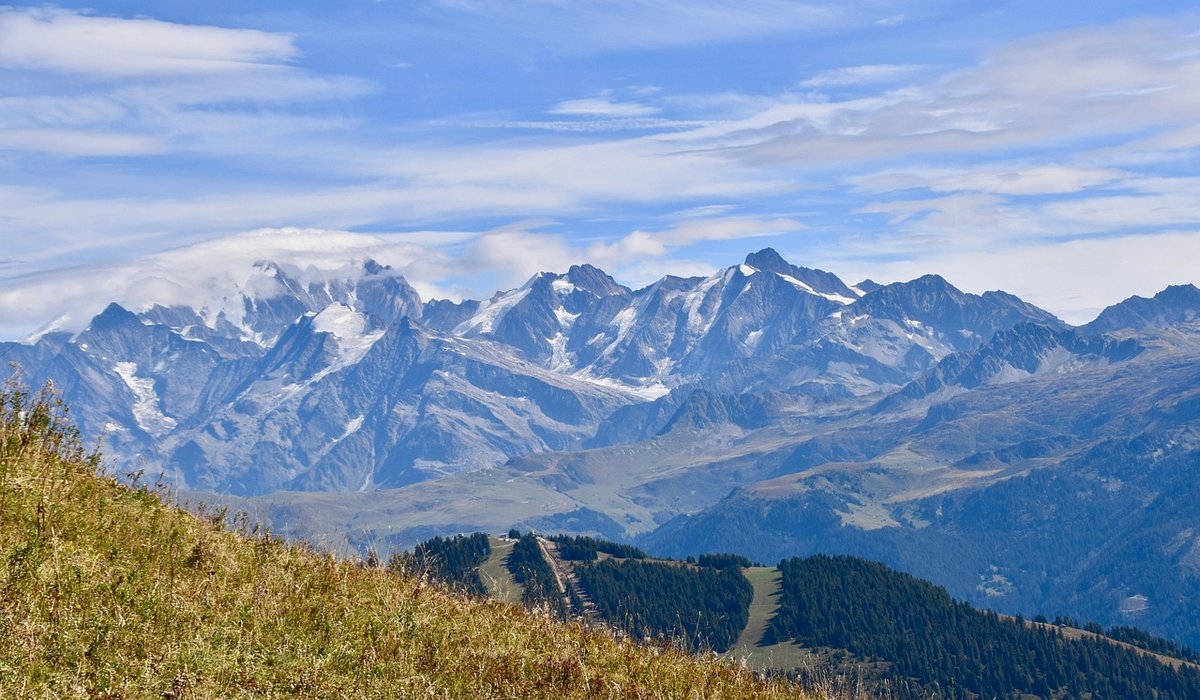
Planning A Ridge Walk In Changeable Mountain Weather
Start With A Mountain Forecast, Not A Valley One
The forecast on your phone for the nearest town tells you what the weather is doing at 100 metres above sea level. Your ridge may sit at 900 metres, and the difference is not a matter of degree — it is often a different day altogether. Before a ridge walk, find a forecast that gives summit-level conditions: wind speed and direction at height, freezing level, cloud base, and the likelihood of showers or snow.
Read the written summary as well as the numbers. A line saying "cloud covering the tops for much of the day, lifting briefly in the afternoon" tells you more about your route than any icon. Watch the trend, too: a front arriving at 2pm matters enormously if you expect to be on the crest at 1pm.
Check it twice — the evening before and again in the morning. Mountain forecasts shift, and a plan built on Thursday's outlook can be wrong by Saturday.
Wind Is What Actually Stops You
On a ridge, wind is the factor that turns a pleasant day into a serious one. Around 30 mph is tiring. At 40 mph you are leaning into it and placing your feet carefully. Above 50 mph on an exposed crest, even a fit, heavy walker can be knocked off balance. Gusts matter more than averages — a 35 mph mean with 55 mph gusts will unsteady you on exactly the step where you need to be steady.
Consider direction, not just speed. A steady wind at your back is manageable; the same wind across a narrow crest, or funnelling through a col, is not. Then add wind chill: 3°C with 40 mph of wind feels well below freezing, and hands stop working long before enthusiasm does.
If the forecast is borderline, ask what you would do if conditions arrive at the top end of the range. If the answer is "come off", plan a lower, less exposed route instead.
Identify Escape Routes Before You Set Off
Every ridge worth walking should be read as a route with exits. Before leaving the car park, know where you can leave the crest and how.
- Which points along the ridge allow a straightforward descent to a valley path, and how long that takes
- Whether any descent leads into steep or loose ground where a slip matters
- Which sections have no reasonable exit, and how long you will be committed for
- The last safe turnaround point — the place after which going back is harder than going on
- A rough time for each: not "sometime after lunch" but "if it is 13:30 and we are not past the second top, we turn"
Say the plan out loud with your group before you start. Agreeing an escape route in the wind, halfway along a ridge, with the cloud dropping, is far harder than agreeing it in a car park with a flask of tea.
Layer For The Ridge, Not The Car Park
Ridges are cold, windy and often wet, and conditions change faster than you can stop and reorganise. Build a system you can adjust without taking your pack off.
- Base layer that moves sweat away — not cotton
- Mid layer fleece or light synthetic, worn or kept at the top of the pack
- Insulated layer for stops and for the moment you slow down
- Waterproof shell with a hood that stays up in wind, plus overtrousers
- Two pairs of gloves, a warm hat, and a spare hat
- Goggles or glasses if there is any chance of spindrift or driving rain
- Map, compass and a paper copy of your route in a waterproof case, plus a headtorch
- Food and drink you can manage one-handed, because you will not want to stop
Pack a spare warm layer in a dry bag. On a long ridge, the difference between a good day and a miserable one is often just having dry gloves at the halfway point.
When The Cloud Comes Down
Ridges and cloud go together. Visibility can fall from ten miles to twenty metres in a few minutes, and the path along a crest is frequently faint, braided or simply absent.
Keep a compass bearing for the next leg and know where you are on the map rather than roughly where you think you are. Count paces for short legs. In poor visibility, keep the group together — a ridge is not the place to spread out and rely on shouting. If the cloud is down and the wind is up, that combination is a strong argument for a lower route.
Decide Early, Decide Together
Ridge days go wrong when decisions are delayed. The wind picks up, the cloud drops, and everyone keeps going because nobody wants to be the one who says something.
So make it easy. Set the turnaround time in advance. Agree that anyone can call it, for any reason, without argument. If someone in the group has gone quiet, or is lagging, ask them directly how they are doing — cold and tired people often stop saying so. And tell someone at home where you are going and when you expect to be back; a text before you set off costs nothing.
A ridge walked in good conditions is one of the finest days out in Britain. A ridge walked in a rising gale with the cloud down is a different proposition entirely, and there is no shame at all in turning around at the first col, dropping back into the valley, and saving the crest for a better forecast.
tag: Weather Safety

Oliver Radcliffe Author
Learn to pace, take bearings and read contours so you can stay on track when cloud reduces visibility on the fells.
YOU MAY ALSO LIKE
Essential Navigation Skills For Misty Hill Days
Sep 21
10Consider ankle support, waterproofing and fit when selecting footwear for multi-day routes across varied British terrain and unpredictable ground.
read more
Choosing Walking Boots For Long Distance Trails
Sep 18
10Understand land access, leave no trace principles and where overnight camping is tolerated before pitching your tent responsibly.
read moreRidge Walks
-

ERRIC CATONA
Close contour lines reveal gradients and potential scrambles, helping you choose a safer route across the hills before you set off.
May 19, 2016 at 5.12 pm
Reply
ERRIC CATONA
Build a flexible clothing system with base layers, insulation and waterproof shells to manage sweat and sudden temperature drops.
May 19, 2016 at 5.12 pm
Reply -
ERRIC CATONA
Assess depth and flow, unbuckle your rucksack and use poles or a human chain to cross safely in spate conditions.
May 19, 2016 at 5.12 pm
Reply
Hill Skills
Your email address will not be published.