
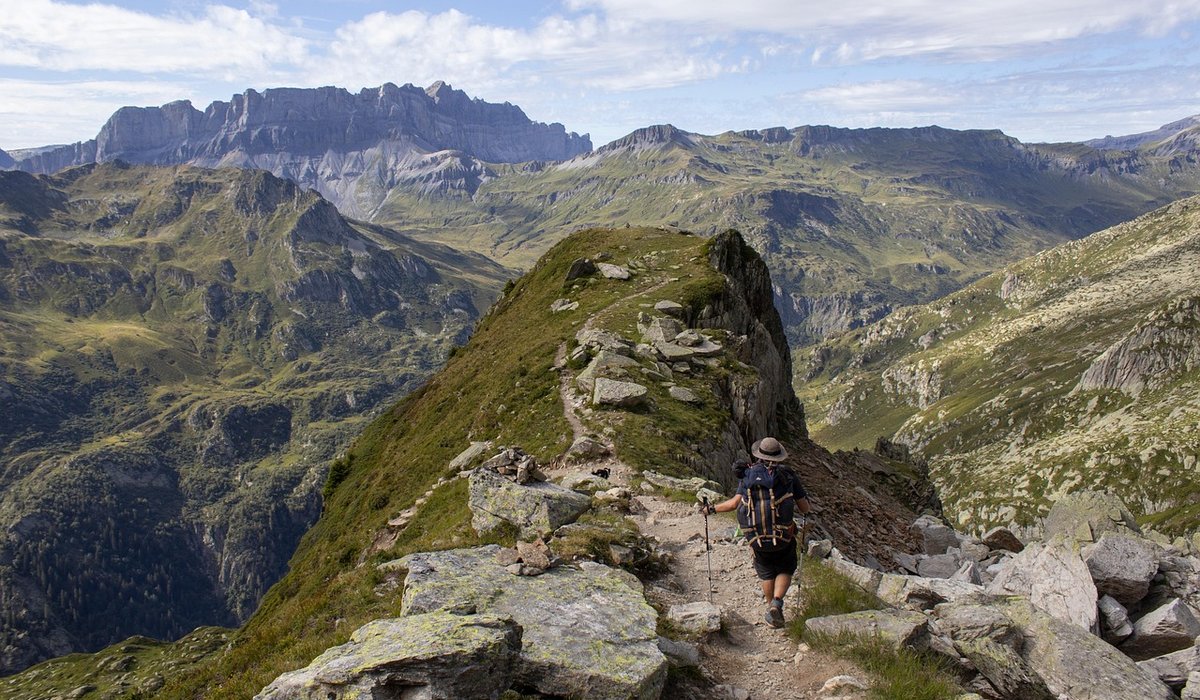
Packing A Day Rucksack For UK Hill Walks
The Pack That Earns Its Keep
A 20 to 30 litre rucksack is the right size for almost every UK hill day. It is big enough to hold everything below without becoming a burden on the climbs, and small enough that you will not be tempted to fill it with things you do not need. Pack it the night before, not in the car park, and get into the habit of laying everything out on the floor first.
Heavier items — water, flask, food — sit close to your back and high in the pack, with softer kit packed around them. Everything that has to stay dry goes inside a liner bag or a dry bag. A rucksack cover helps in the rain, but it is not a substitute for a proper liner. Keep the things you will want on the move — snacks, hat, gloves, map — in the lid or a side pocket rather than at the bottom.
Waterproofs: The One Item You Never Leave Behind
British hill weather has a way of making a forecast look optimistic. Take a waterproof jacket with taped seams and a hood that fits over a hat, along with waterproof trousers. Even in July, even if the morning is blue, these go in the pack. On exposed ridges the wind alone can chill you well before any rain arrives, and a shell pulls double duty as a windproof layer at almost no weight penalty.
If your jacket is old, check the seams and the hood before you leave. A shell that has wetted out is worse than no shell at all, because it stops breathing while still pretending to protect you. Waterproof trousers you can pull on over boots, without sitting down in a bog, are worth their weight in gold.
Warm Layers And The Dry Base Layer Rule
Stopping for lunch on a summit is when most people get cold. Carry a mid-layer — a fleece or a light synthetic jacket — and one spare insulated layer for the stop itself. Cotton is the enemy here: once wet it stays wet, and it pulls heat out of you. Choose synthetic or merino base layers, and carry a spare one in a dry bag if the day looks wet.
- A warm hat and a pair of gloves, even in summer
- Spare socks, because wet feet ruin the descent
- A synthetic insulated jacket for stops and emergencies
- A light windproof layer for exposed ridges
Food And Water: Fuel For The Pull Up
A day on the hills burns more than most people expect. Carry at least a litre of water, and closer to two on a hot day or a long route with no chance to refill. A flask of soup or tea is a small luxury that transforms a cold winter lunch. Fill a bottle at home rather than relying on streams, which may carry agricultural runoff or, higher up, be no more than a trickle.
Food should be easy to eat with gloves on and easy to reach without emptying the pack. Sandwiches, oatcakes, cheese, flapjack, fruit, a pork pie if you are feeling traditional — and always one extra item you would only eat if something went wrong. Eat before you are hungry and drink before you are thirsty. It sounds obvious; almost everyone forgets it on the climb.
Map, Compass And The Habit Of Knowing Where You Are
Your phone is a useful backup, not a navigation system. Carry a paper map of the area — a 1:25,000 sheet for intricate ground, a 1:50,000 for broader ridges — inside a map case or a clear plastic bag. Add a baseplate compass and know how to take a bearing and follow it. Fold the map so the section you need is visible, and keep it in a pocket rather than buried in the pack.
Before you set off, identify your escape routes down off the ridge, the points where paths meet, and the last clear feature before the top. If you are walking in cloud, a bearing and a bit of pace counting will get you home far more reliably than a dwindling battery bar. Take a small power bank if you plan to use your phone for photographs or as a second GPS.
Head Torch And The Small Things That Save A Day
A head torch belongs in every day pack, whatever the season. A turned ankle, a slow companion, a wrong turn or a long chat on the summit can all push you into darkness. Choose something with at least 200 lumens, keep spare batteries with it, and check it works before you leave the house.
- Head torch with spare batteries, plus a tiny backup torch
- Whistle on a cord, and a survival bag or lightweight shelter
- Small first aid kit with blister plasters and tape
- Fully charged phone inside a dry bag
- Emergency contact and route details left with someone at home
A day rucksack packed this way weighs very little and turns an ordinary walk into something you can enjoy whatever the weather throws at you. Pack it well, and the hills feel a little friendlier.
tag: Gear Reviews

Oliver Radcliffe Author
Spot early signs such as shivering and confusion, then shelter the casualty, replace wet clothing and warm them gradually.
YOU MAY ALSO LIKE
Recognising And Treating Hypothermia On The Hills
Aug 13
10Practise taking bearings and following compass legs to maintain accuracy when paths disappear in mist or darkness on the hill.
read more
Navigating With A Map And Compass In Poor Visibility
Aug 11
10Start with gentle elevated routes that offer dramatic views without exposed scrambling, building confidence for harder mountain days.
read moreRidge Walks
-

ERRIC CATONA
Break the route into manageable stages, book accommodation early and prepare for mixed weather over several days on foot.
May 19, 2016 at 5.12 pm
Reply
ERRIC CATONA
Carry out all litter, respect wildlife and keep to paths to protect fragile habitats and farming livelihoods in rural areas.
May 19, 2016 at 5.12 pm
Reply -
ERRIC CATONA
Use head nets, repellent and avoid damp sheltered spots at dawn and dusk to reduce biting insect nuisance.
May 19, 2016 at 5.12 pm
Reply
Hill Skills
Your email address will not be published.