
Best Ridge Walks For Beginners In The Lake District
Why Ridges Make The Ideal First Mountain Day
There is a moment on every good ridge when the ground falls away on both sides, the path narrows just enough to make you pay attention, and you realise you have been grinning for the last ten minutes. That is what ridge walking gives you: the sense of being up high and committed, without the exposure and hand-on-rock scrambling that comes with the likes of Striding Edge.
The Lake District is perfect for this. Its ridges are short enough to fit into a morning, high enough to feel like proper mountains, and almost all of them can be walked by anyone with a reasonable level of fitness and a decent pair of boots. The routes below are the ones I recommend to friends who have done a few valley walks and want to see what all the fuss is about.
What Makes A Ridge Beginner Friendly?
A true beginner ridge has three things in common. First, the crest is broad enough to walk normally, with no need to use your hands. Second, any drops are gradual or set back from the path, so a stumble is unlikely to become a fall. Third, the route is short enough to retreat from easily if the weather turns.
When you are planning, check the Ordnance Survey map for the words "scramble" or crag symbols close to the path line, and read a guidebook description before you go. If a route mentions "exposed" or "hands on rock", save it for later. Everything below is genuinely walkable in trainers on a dry day, though boots are still the sensible choice.
- Distance: 3–7 miles is plenty for a first ridge day.
- Ascent: 250–500 metres, climbed gradually.
- Conditions: pick a dry, clear day with light winds, and start early.
Cat Bells: The Classic First Ridge
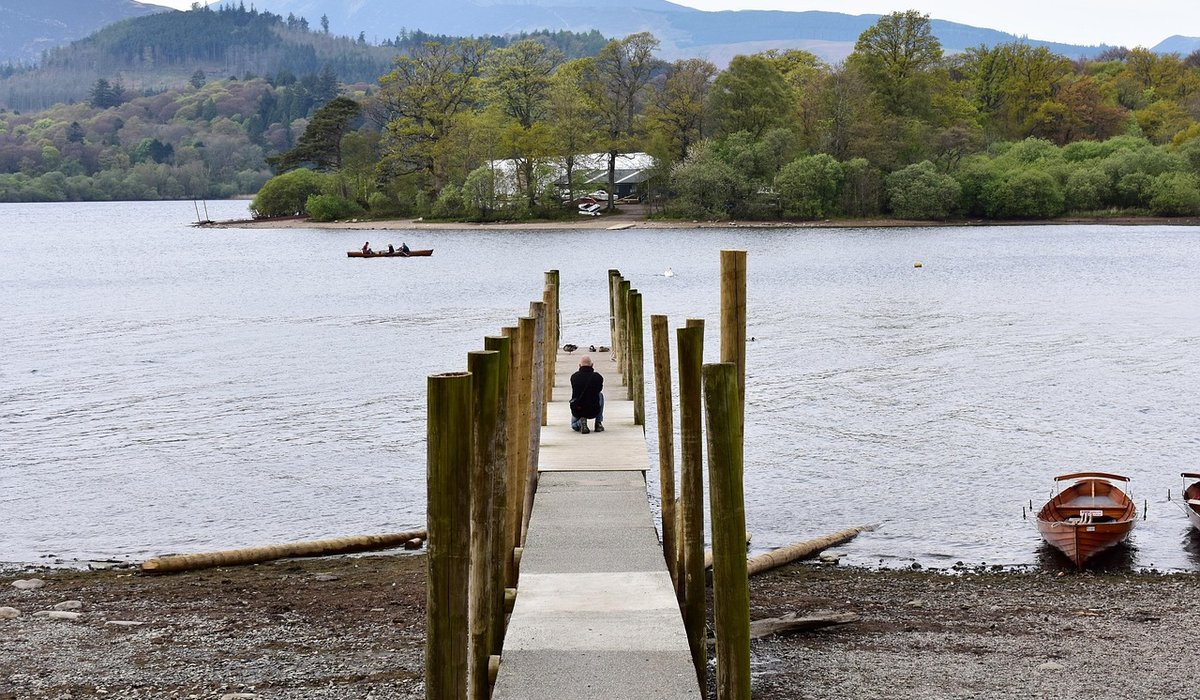
If you only walk one ridge in the Lake District, make it Cat Bells. At 451 metres it is modest, but the position above Derwent Water is superb, and the section from Hawes End to the summit gives you that airy, elevated feeling without ever becoming difficult.
Start from the National Trust car park at Hawes End, or better still, catch the launch from Keswick to Hawes End jetty and walk back into town afterwards. The climb begins almost immediately through birch woodland, then opens onto the ridge. There is one short rocky step near the top that feels exciting without being exposed, and the summit view down the length of Borrowdale is one of the finest in England.
Most people carry on over the tops to Maiden Moor and descend by Hause Gate for a satisfying half-day. Allow two to three hours, and take a windproof layer, because the breeze on the crest is often stronger than it feels in Keswick.
High Rigg And Rannerdale Knotts: Short, Quiet And Rewarding
High Rigg is the Lake District's best-kept secret for beginners. Rising only to 347 metres between Threlkeld and Legburthwaite, it is a knobbly, grassy ridge with a string of little summits and barely another soul about. Park near St John's in the Vale and walk it north to south, finishing with a pint in Threlkeld. There are no technical difficulties at all, but the views across to Blencathra and Skiddaw make it feel far grander than its height suggests.
Rannerdale Knotts, above Crummock Water, is equally friendly and even shorter. The ridge is narrow enough to feel adventurous without any real exposure, and the descent into Rannerdale itself is famous for its bluebells in late May. It is a perfect evening walk, taking around ninety minutes, and a lovely introduction to the western fells.
Helm Crag To Calf Crag: Your First Longer Ridge
When you want a proper day out, the grassy ridge running north from Grasmere over Helm Crag, Gibson Knott and Calf Crag is the ideal step up. It is roughly six miles there and back, with about 500 metres of ascent, and the ground is mostly soft turf rather than rock.
Helm Crag itself, the celebrated "Lion and the Lamb", has a short optional scramble to the very top. Skip it on your first visit and enjoy the view from the main summit instead. From there the ridge rolls along pleasantly, with a few boggy patches after rain, before you turn back at Calf Crag. Navigation is straightforward in clear weather, but do carry a map and compass, as the plateau above Easedale can be confusing in cloud.
Building Confidence For Harder Days
Once you have ticked off a few of these, you will notice your confidence growing quickly. The next logical steps are longer horseshoes with more sustained height, such as the Fairfield Horseshoe from Ambleside, or the High Street ridge above Haweswater. Both involve more ascent and rougher ground, but no scrambling.
Before you move on, practise the basics on the easy ridges: take a bearing, check your timing against the map, and get used to eating and drinking on the move. Learn to read the sky and be willing to turn back. Do that, and the bigger ridges will feel like a natural progression rather than a leap into the unknown.
tag: Ridge Walks

James Whitaker Author
Break the route into manageable stages, book accommodation early and prepare for mixed weather over several days on foot.
YOU MAY ALSO LIKE
Planning A Long Distance Trail Across Northern England
Aug 5
10Carry out all litter, respect wildlife and keep to paths to protect fragile habitats and farming livelihoods in rural areas.
read more
Leave No Trace Principles For Countryside Visitors
Aug 1
10Use head nets, repellent and avoid damp sheltered spots at dawn and dusk to reduce biting insect nuisance.
read moreRidge Walks
-

ERRIC CATONA
Look for reliable brightness, long battery life and a comfortable strap when walking in darkness on unmarked terrain.
May 19, 2016 at 5.12 pm
Reply
ERRIC CATONA
Pack blister plasters, painkillers, a survival bag and a charged phone for emergencies far from help or phone signal.
May 19, 2016 at 5.12 pm
Reply -
ERRIC CATONA
Adjust your pace, use rest steps and keep your pack close to your back to conserve energy on long ascents.
May 19, 2016 at 5.12 pm
Reply
Hill Skills
Your email address will not be published.